
'As the markets are expected to remain jittery in the near term, we advise investors to use this opportunity to enter quality largecaps from a long-term perspective.'

Latest GDP growth numbers a one-off development and not the beginning of a trend, says CEA V Anantha Nageswaran.

Over the previous eight sessions, Brent had lost about $7 a barrel, almost 20 per cent

The Netherlands has emerged as India's fifth-largest export destination in 2021-22 (FY22), jumping from its 10th position a year ago. Exports to the fifth-largest economy in the European Union (EU) bolted 94 per cent to $12.5 billion in the financial year ended March 31. In FY22, the Netherlands surpassed Hong Kong, Singapore, the UK, Germany, and Nepal to become India's largest export destination in the EU. Germany, which was earlier India's top European export destination (eighth position), has now dropped two ranks to 10th place.
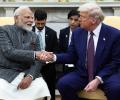
The real intention of the 'Tariff Man' (as Trump calls himself) may not even be to put the 'Tariff King' (as he describes India) on the mat with a knockout punch but to arm-twist the Indian leadership to agree to some multi-billion dollar mega arms deal, argues Ambassador M K Bhadrakumar.

India's exports fell 5.12 per cent to $24.89 billion in October, after recording positive growth in September, on account of drop in shipments of petroleum products, gems and jewellery, leather and engineering goods, according to government data released on Friday. Trade deficit in October narrowed to $8.71 billion as against $11.75 billion in the corresponding month a year ago. Imports also fell 11.53 per cent to $33.6 billion (year-on-year) in October 2020.

India's crude oil import bill is set to exceed $100 billion in the current fiscal year ending March 31, almost double its spending last year, as international oil prices trade at seven-year highs. India spent $94.3 billion in the first 10 months (April-January) of the ongoing financial year that started April 1, 2021, according to data from the oil ministry's Petroleum Planning & Analysis Cell (PPAC). It spent $11.6 billion in January alone when oil prices had started to surge.
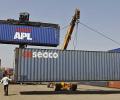
India's exports to China have increased by 16.15 per cent to USD 20.87 billion in 2020 from USD 17.9 billion in the previous year on account of healthy growth in the shipments of ores, iron and steel, aluminum and copper, according to the data of the commerce ministry.

The Organization of the Petroleum Exporting Countries (Opec) and its partners, such as Russia, collectively termed Opec+, have decided to cut crude oil production by 100,000 barrels per day (bpd) from October onwards, at a meeting on Monday. In a step that may increase prices in India, the group has decided to reduce output quotas for October, after a fall in global oil demand outlook. The cut in output is equal to 0.1 per cent of global supply.
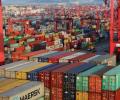
India's exports rose by 22.36 per cent to $33.81 billion in February on account of healthy growth in sectors like engineering, petroleum and chemicals, even as the trade deficit widened to $21.19 billion, according to preliminary data released by the commerce ministry on Wednesday. Imports during the month too jumped by about 35 per cent to $55 billion, with inbound shipments of petroleum and crude oil surging 66.56 per cent to $15 billion. The trade deficit -- the difference between imports and exports -- stood at $13.12 billion in February 2021.

A spokesman for Gibraltar's government also confirmed that police proceedings against four members of the crew had ended.

Oil share declines to 9.35 per cent in April-September from 17.23 per cent in the same period of last year.

After recording positive growth in September, India's exports declined 5.4 per cent to $24.82 billion in October on account of dip in shipments of petroleum products, gems and jewellery, leather, and engineering goods. Trade deficit in October narrowed to $8.78 billion as against $11.76 billion, as imports also fell 11.56 per cent to $33.6 billion during the month under review.

While consumers have enjoyed lower fuel prices, producers have cut spending and thousands of jobs
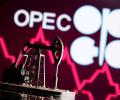
It's the sovereign right of the Organization of Petroleum Exporting Countries to decide on the oil production capacities, Union Minister of Petroleum and Natural Gas Hardeep Singh Puri said Friday. Refraining from commenting on the controversial decision of OPEC on cutting oil production by two million barrels a day, which has taken the world by surprise, Puri said it is likely to be scrutinized very carefully. During an interaction with a group of Indian reporters, he said that India as one of the major consumers of oil and gas also has a major say in the global oil market.
Imports too declined 26 per cent to $29.47 billion in August, leaving a trade deficit of $6.77 billion.

Global brokerage firm CLSA has reversed its early tactical shift from Indian equities to Chinese stocks, and has decided to raise India allocation while cutting exposure to China. In its report titled 'Pouncing Tiger, Prevaricating Dragon', CLSA cited challenges facing Chinese markets in the aftermath of Donald Trump's victory in the US elections as the reason for the move. "Misfortune can happen in threes. So it has played out for Chinese equities over the past week.

Among the 30 Sensex companies, Mahindra & Mahindra, Titan, HDFC Bank, Reliance Industries, UltraTech Cement, Bajaj Finance, Axis Bank, Tata Motors and Asian Paints were the biggest gainers. On the other hand, Tech Mahindra, Tata Consultancy Services, Wipro, HCL Technologies, Larsen & Toubro and State Bank of India were among the major laggards.
Trade deficit during the month narrowed to USD 14.54 billion from USD 15.3 billion in January 2020. It was USD 15.44 billion in December 2020.

The country's exports in December surged 37 per cent on an annual basis to $37.29 billion, the highest-ever monthly figure, government data showed on Monday.

India is back on the diplomatic table pushing oil producing countries to raise production in a bid to cool down runaway oil prices. Brent crude oil prices traded above $90 a barrel, on Thursday, for the first time since 2014. Brent is the most popular marker for crude oil trade. It is used as a benchmark for two-thirds of the world's internationally traded crude oil.

Sectors with positive growth during the month include rice, iron ore, oil seeds, oil meals, meat, dairy and poultry products, pharmaceuticals, coffee, engineering goods, and plastic.
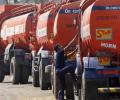
Every time the Indian economy has faced headwinds due to international developments, the oil sector has played a crucial role, explains A K Bhattacharya.
Import segments which recorded negative growth include gold, silver, transport equipment, coal, fertiliser, machinery and machine tools. However, exports of oil seeds, coffee, rice, tobacco, spices, pharma, and chemicals reported positive growth in June.
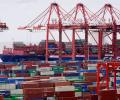
India's exports rose by 69.35 per cent to $32.27 billion in May, driven by healthy growth in sectors such as engineering, petroleum products and gems and jewellery, even as trade deficit widened to $6.28 billion, according to government data released on Tuesday. Exports in May last year stood at $19 billion, and in May 2019 it was at $29.85 billion, the data showed. Imports too grew in May 2021 by 73.64 per cent to $38.55 billion -- leaving a trade deficit for the month being reviewed at $6.28 billion.

In a bid to further cool down edible oil prices and curb hoarding, the Centre on Friday extended stock limits on edible oils and oilseeds till June 30. Besides, the government has specified the stock limits that have to be imposed by states that have not implemented the earlier order on the limits. In October 2021, the ministry of consumer affairs had imposed stock limits till March 2022 and left the decision to states to decide on the stock limits based on available stock and consumption pattern.
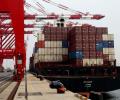
On the back of rising crude oil purchases, India's bill for imports from sanctions-hit Russia jumped 3.5 times in a year in April to $2.3 billion, showed data from the commerce ministry. In April, India's crude oil imports from Russia were valued at $1.3 billion, 57 per cent of India's total inbound shipments from Russia. Other major imported items during the month included coal, soybean and sunflower oil, fertilisers, and non-industrial diamonds. That month, Russia was also the fourth-largest crude petroleum supplier to India, after Iraq, Saudi Arabia, and the United Arab Emirates (UAE).
India's exports jumped 45.76 per cent to $33.28 billion in August on account of healthy growth in segments like engineering, petroleum products, gems and jewellery and chemicals, even as the trade deficit widened to a four-month high of $13.81 billion.

Refuting all the allegations, IOC has clarified that no monopolistic situation exists in supply and pricing of aviation turbine fuel (ATF) to airlines.

The country's exports grew 5.37 per cent year-on-year to $27.24 billion in January 2021, mainly driven by healthy growth in pharma and engineering sectors, according to provisional data of the commerce ministry. Trade deficit during the month narrowed to $14.75 billion from $15.3 billion in January 2020. It was $15.44 billion in December 2020. Imports in January 2021 rose 2 per cent to $42 billion.

'The shifts in US involvement in global conflicts and geopolitical alliances could introduce uncertainties.'

India's exports rose marginally to $27.15 billion in December 2020, while imports surged 7.56 per cent to $42.59 billion, official data showed on Friday. The merchandise exports were valued at $27.11 billion in December 2019 while imports had totalled $39.59 billion.

'Indian and Iranian sources both confirmed to me that India and Iran are moving ahead to implement a payment system on buying oil from Iran and hope to finalise it very soon,' says Aveek Sen.
The country's exports grew by 47.19 per cent to $35.17 billion on account of healthy growth in the outbound shipments of petroleum, engineering, and gems and jewellery, according to the provisional data of the commerce ministry. Imports during the month also rose by 59.38 per cent to $46.40 billion, leaving a trade deficit of $11.23 billion. Exports of petroleum, engineering, and gems and jewellery in July increased to $3.82 billion, $2.82 billion and $1.95 billion respectively, the data showed.

Speaking at a joint press event with Macron, Modi, who is in Paris on a two-day official visit, said a roadmap to strengthen India-France strategic ties over the next 25 years was being prepared with bold and ambitious goals on the anvil.

The country's exports dipped 8.74 per cent to $23.52 billion in November on account of contraction in shipments of key sectors like petroleum, engineering, chemicals and gems and jewellery, official data showed on Tuesday. Trade deficit during the month narrowed to $9.87 billion as imports too declined by 13.32 per cent to $33.39 billion.
India's imports from Russia rose 64 per cent to $36.27 billion during the April-October period this fiscal on higher shipments of crude oil and fertiliser, according to the commerce ministry data. With this, Russia has become India's second-largest import source during the first seven months of this fiscal. The imports were $22.13 billion during April-October 2022.

International oil prices have hit a six-month low, helping Indian fuel retailers breakeven on petrol but they continue to lose money on diesel - the most used fuel in the country, officials said. The world's best-known crude benchmark, Brent was trading at $94.91 per barrel on Thursday after concerns of a global recession led to it slipping to a six-month low of $91.51 on the previous day. The current rates are a relief to India, which is 85 per cent dependent on imports for meeting its oil needs.

From the Sensex pack, Bajaj Finance, Bajaj Finserv, Reliance Industries, Wipro, HDFC Bank, HDFC, ICICI Bank and Tata Steel were the major laggards. ITC was the lone winner in the Sensex pack.
India's merchandise exports in October surged 42.33 per cent to $35.47 billion on the back of good performance by the engineering and petroleum sectors, as per provisional data released by the government on Monday. The exports stood at $24.92 billion in October 2020 and $26.23 billion in October 2019. "India's merchandise exports in October 2021 was $35.47 billion, an increase of 42.33 per cent over $24.92 billion in October 2020 and an increase of 35.21 per cent over $26.23 billion in October 2019," as per an official statement.
